Calculates two probabilities:
- Probability of each class
- Conditional probabiliyu for each class given each value
Called Naive because it assumes all variables are independent
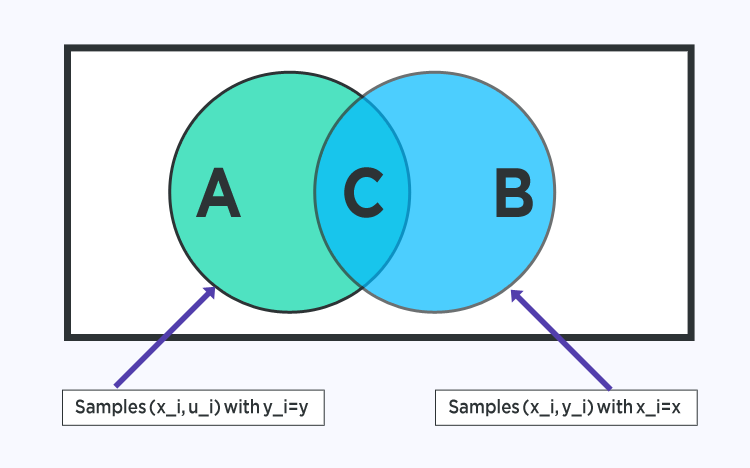 The formula is given by: P(A|B) = P(B|A) * P(A) / P(B)
Where P(A|B) is the posterior probability of A given B, P(A) is the prior probability, P(B|A) is the likelihood which is the probability of B given A, and P(B) is the prior probability of B.
The formula is given by: P(A|B) = P(B|A) * P(A) / P(B)
Where P(A|B) is the posterior probability of A given B, P(A) is the prior probability, P(B|A) is the likelihood which is the probability of B given A, and P(B) is the prior probability of B.
Advantages of the Naive Bayes Classifier Algorithm
-
The Naive Bayes Classifier algorithm performs well when the input variables are categorical.
-
A Naïve Bayes classifier converges faster, requiring relatively little training data set than other discriminative models like logistic regression when the Naïve Bayes conditional independence assumption holds.
-
With the Naive Bayes Classifier algorithm, predicting the class of the testing data set is more effortless. A good bet for multi-class predictions as well.
-
Though it requires conditional independence assumption, Naïve Bayes Classifier has performed well in various application domains.